Indian cinema is simply one of several influences affecting our popular culture, as physical and temporal distances have shrunk. On the other hand, that’s more of a mirror reflecting our culture, from fashion to lifestyle.
Any society’s popular culture is characterised by the shared ideas and themes that it strives to establish. Indian cinema has been one of the mediums through which the culture may be observed. Along with describing a society’s reality, cinema aids in judging societal norms/values/customs/beliefs.
Culture isn’t static; it’s always changing. As civilization evolves, cultural connotations take on new meanings. Since the release of Raja Harishchandra in 1913, a lot of things have changed in our culture. Indian film has always mirrored what the general public believes in and where society will be in the future. This may be expanded as we travel from the past to the present.
Zamindari and labour exploitation was common inside the pre-independence era when Britishers fled. This was clearly demonstrated in films such as ‘Pyaasa’ and ‘Do Biga Zameen.’ The rich culture of India, which is based on kinship and family, was obvious. The extreme poverty that caused such anguish was also obvious. In these films, Gandhian and Nehruvian ideals were prominent. Everything that was going on in society was plainly mirrored on the silver screen. Also, because superstition was more prevalent than in the past, films based on mythology, such as “Jai Santoshi Maa,” became epics of honesty and idol worship.
With the shifting political situation in the nation as well as the ascension of Ms Indira Gandhi to power, Indian society underwent a transformation. Unemployment was rampant, as well as the people were forced to live in a state of ‘manufactured emergency.’ The crowd’s rage was represented in the form of an enraged young guy in the cinema.
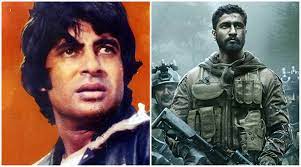
Movies like ‘Deewar’ and ‘Zanzeer’ depicted a road of integrity inside the midst of such turbulence, as well as the rage of the honest working class. It demonstrated how the country’s young had a plethora of buried desires, frustrations, and wrath toward the corrupt government. This gave birth to a celebrity, Amitabh Bachchan, who gave the masses a voice and with whom they could identify.
After Rajiv Gandhi’s death, there was a lot of confusion on the screen, because no decent movie came out to implement any new wisdom. In the Cinema, there has been no progress or advancement. It degraded, just like the state of our country.
Also Read: Are Indian films banned in Pakistan?
