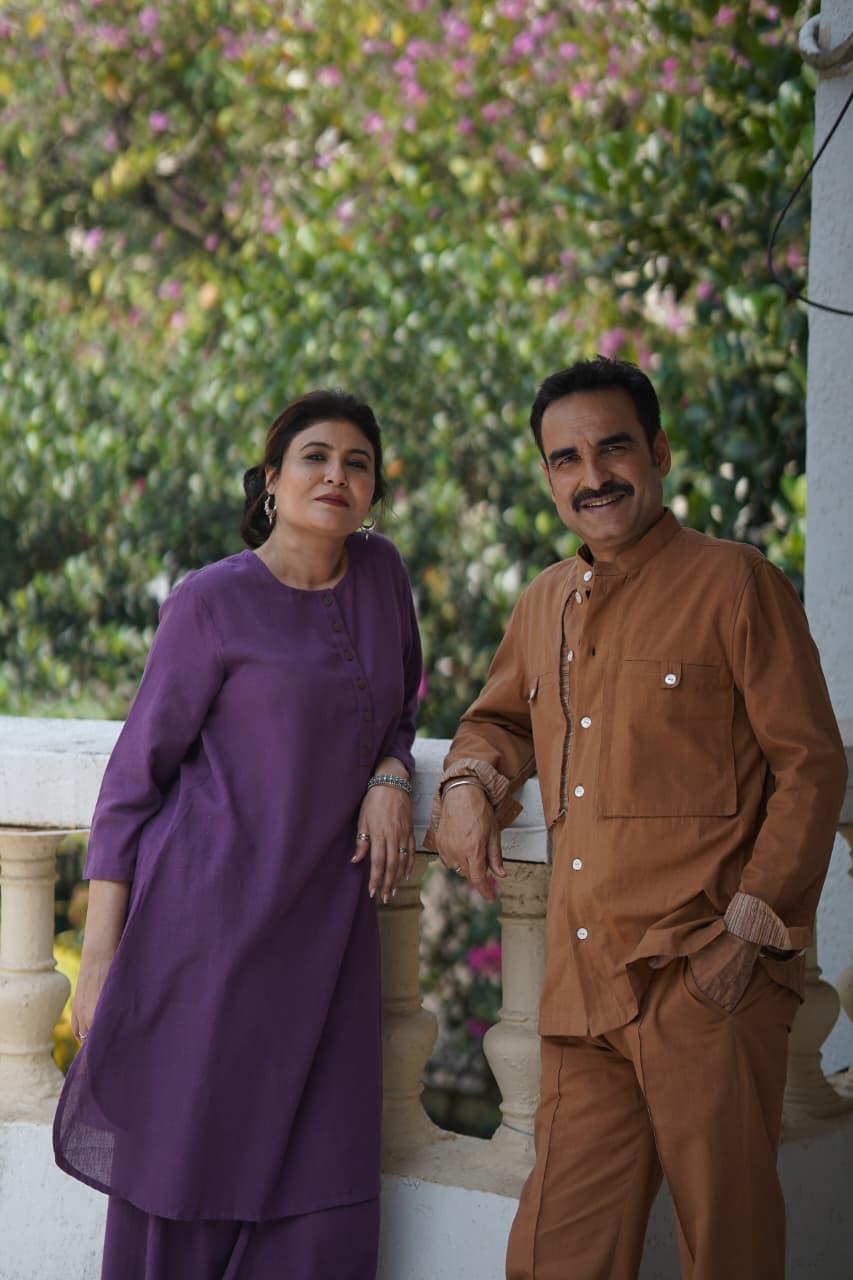
National Award-winning actor Pankaj Tripathi has announced the launch of his handloom venture ‘Tulo’, a brand dedicated to promoting India’s rich handloom traditions, empowering local artisans, and encouraging consumers to embrace homegrown products. Derived from the Bengali word for handloom cotton, “Tulo” aims to bridge India’s centuries-old weaving heritage with contemporary audiences while creating sustainable opportunities for artisan communities across the country.

Known for his longstanding association with Khadi and indigenous textiles, Pankaj Tripathi has consistently advocated for Indian handloom products through public appearances, social media initiatives, and awareness campaigns in collaboration with the Ministry of Textiles over the years. His personal connection with India’s weaving traditions ultimately inspired him to venture into the sector as an entrepreneur committed to preserving and promoting India’s textile legacy.
Tulo has been conceptualized in collaboration with renowned stylist Vineet Chauhan, who has worked closely with Pankaj over the years and shares his passion for authentic Indian craftsmanship.

Speaking about the launch of Tulo, Pankaj Tripathi said, “For me, Tulo is not just a business venture; it is an emotional journey and a tribute to the countless artisans whose hands have kept India’s textile heritage alive for generations. Over the years, while traveling for shoots across the country, I have had the privilege of witnessing the beauty and dedication that goes into handloom weaving. I remember shooting in Chanderi and seeing women in almost every household weaving sarees and fabrics on handlooms. It fascinated me because this wasn’t just a livelihood – it was a way of life, a tradition passed down through generations.”
“Similarly, whenever I visited Banaras, I would often spend time in the weavers’ neighborhoods. Watching artisans create intricate fabrics entirely by hand felt almost magical. In a world dominated by machines and mass production, I found myself asking, do people still make clothes by hand? And perhaps nowhere in the world is this tradition alive and diverse as it is in India. The more I explored, the deeper my connection became.”

“Handloom is not merely about fabric; it is about stories, communities, culture, patience, and human skill. Every weave carries the identity of a region, every motif carries history, and every garment carries the hard work of an artisan. Unfortunately, many weaving communities continue to struggle despite preserving traditions that are invaluable to our cultural identity. I felt that if I could contribute in any way towards creating awareness and generating opportunities for these artisans, I should do so.”
“My association with Khadi and handloom products over the years strengthened this belief. Through Tulo, we want to celebrate Indian craftsmanship while creating a platform that helps artisans receive the recognition and support they truly deserve. We want consumers to understand the value of handmade products and reconnect with the beauty of slow, thoughtful craftsmanship.”
“This idea took shape through countless conversations with my stylist Vineet Chauhan, who shares a deep appreciation for Indian textiles. Together, we envisioned a platform that would not only showcase beautiful handloom products but also tell the stories behind them. Our dream is to collaborate with artisan communities from different parts of India and bring their extraordinary work to a wider audience.”
“India’s handloom tradition is thousands of years old. It is one of our greatest cultural treasures. Tulo is our small effort towards preserving that heritage, empowering artisans, and ensuring that future generations continue to value and celebrate what makes Indian craftsmanship so unique. If through this venture we can create meaningful opportunities for even a few artisans and inspire more people to choose homegrown products, we will consider it a success.”
With Tulo, Pankaj Tripathi adds another meaningful chapter to his journey one rooted in culture, sustainability, and a deep commitment to preserving India’s rich handloom legacy for generations to come.